

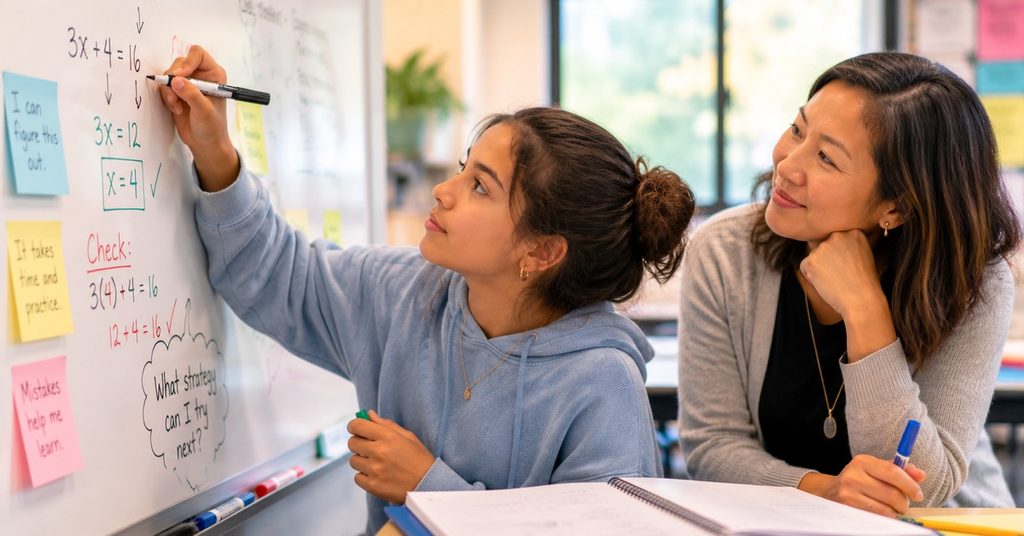
A growth mindset involves more than encouraging students to persist or believe they can improve. It also asks educators to recognize the strengths, experiences, identities, and perspectives students bring to learning—and to create environments in which every student is seen as capable of growth and contribution.
Originally published as a response in Larry Ferlazzo’s Classroom Q&A in Education Week, this piece explores growth mindset through the lens of culture, relationships, and students’ experiences. Some of the terminology and cultural framing reflect the time in which it was written; its central emphasis on recognizing students’ capacities and creating opportunities for every learner to succeed remains important.
Carol Dweck’s research on growth mindset emphasizes the belief that abilities can develop through learning, effort, effective strategies, feedback, and support. A growth mindset encourages students to engage with challenges, persist when learning is difficult, and see their capacities as something that can continue to develop.
This perspective is equally important for educators. Our beliefs about students—their abilities, potential, and capacity to learn—can shape the opportunities and support we provide. Claude Steele’s (2010) work also reminds us that students’ learning experiences can be affected by messages and expectations associated with their identities and social groups.
A strengths-based growth mindset therefore begins with a fundamental belief: every student is capable of learning, developing, and contributing.
Students enter classrooms with varied experiences of language, literacy, learning, family, and community. The practices most familiar or valued in school may align more closely with some students’ experiences and less closely with others’. These differences should not be interpreted as differences in students’ capacity to learn. Instead, they remind us to understand the knowledge, strengths, cultural practices, languages, and ways of learning that students bring.
A growth mindset therefore requires more than believing that students can improve. It also requires educators to examine how our own assumptions and expectations shape learning opportunities. When we learn from students and families and connect learning with what is meaningful in their lives and communities, we create more pathways for students to engage, contribute, and succeed.
The same growth versus fixed mindset pertains to educators, as everyone has the potential to improve using the tenets of Dweck’s growth mindset.
As educators, our individual perspectives are always partial. We deepen our understanding when we listen to and learn from students, families, colleagues, and members of the broader community. Creating opportunities for this dialogue helps us build learning environments in which every student is seen as capable, continually developing, and able to contribute.
When we welcome the perspectives, experiences, languages, cultures, and strengths that students and families bring—and allow these to inform our practice—we put a growth mindset into action. We communicate that every student has the capacity to learn, grow, contribute, and succeed.———————————
Originally published in Larry Ferlazzo’s Classroom Q&A in Education Week, December 21, 2015. It draws from Debbie Zacarian and Michael Silverstone’s In It Together: How Student, Family, and Community Partnerships Advance Engagement and Achievement in Diverse Classrooms (Corwin, 2015).

← Back to Publications & Resources
