


by Debbie Zacarian & Michael Silverstone

Meaningful change in education is collaborative. It requires listening across differences, valuing the strengths and perspectives that students, families, educators, and communities bring, and creating opportunities for everyone to participate in shaping learning.
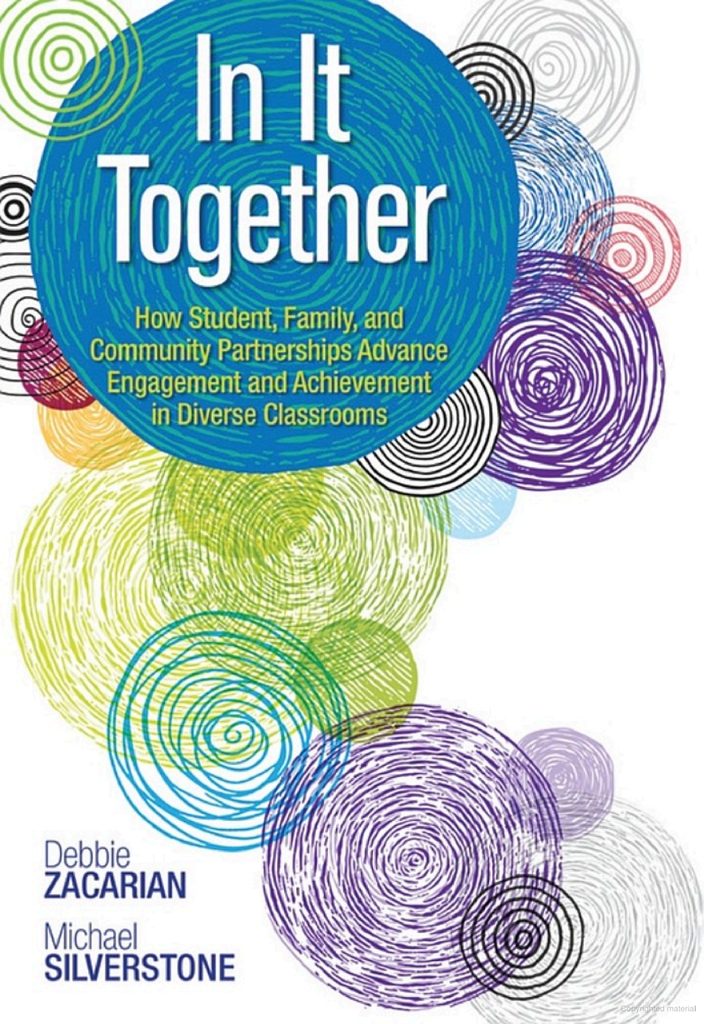
Originally written with Michael Silverstone in 2015, this article reflects on what we learned from writing In It Together and how the same principles—listening, collaboration, mutual respect, and shared responsibility—can strengthen schools and learning communities.
Writing In It Together reinforced for us that meaningful collaboration requires more than simply working alongside one another. It requires listening carefully, making space for different perspectives, asking questions, and being willing to reconsider our own assumptions. These practices shaped how we worked together as authors and also reflect what we believe is essential in schools.
Education is strengthened when students, families, educators, and members of the broader community are not simply recipients of decisions but meaningful participants in them. Each brings knowledge, experiences, perspectives, and strengths that can deepen our understanding of what students need and how schools can support their learning and development.
Valuing Differences Is Not a New Battle Cry
The call to recognize and respond to differences among students is not new. For decades, education policy and practice have wrestled with questions of equity, accountability, access, and the best ways schools can serve increasingly diverse student populations. Yet policies and standards alone cannot create the conditions students need to thrive.
What matters equally is how we work together within our schools and communities. When we listen to different perspectives, recognize the strengths that students and families bring, and share responsibility for creating meaningful learning opportunities, we move from simply acknowledging differences to building educational communities in which those differences are valued.
Real Change Happens Through Partnerships
Schools are strengthened when students, families, educators, and other members of the school community are welcomed as active participants. Meaningful interaction creates opportunities to listen, learn from one another, challenge assumptions, and develop shared understandings.
Our experience writing together reflected this process. Multiple drafts required us to listen closely, negotiate differences, reconsider ideas, and trust one another. Public education is also a collaborative endeavor. Its success depends on respectful engagement across differences and the meaningful participation of students, families, educators, and communities in the shared work of supporting students to learn and thrive.
Being In It Together
No one person or authority has all the answers. When we invite and remain open to what others bring, allow ourselves to be changed by different perspectives, and view those perspectives as resources rather than obstacles, we can truly be in it together.
This principle shaped the development of In It Together. We drew on examples from educators and professional organizations to illustrate how partnerships can work in practice. We also incorporated research-based strategies designed to help educators build on the strengths, experiences, languages, cultures, and knowledge that students and families bring to school.
Being “in it together” means recognizing that supporting students to learn, contribute, and thrive is shared work. It depends on relationships, reciprocal partnerships, meaningful participation, and a willingness to learn from one another.
Originally published on ZacarianConsulting.com in 2015; updated in 2026.
It draws from their book, In It Together: How Student, Family, and Community Partnerships Advance Engagement and Achievement in Diverse Classrooms (Corwin, 2015).
← Back to Publications & Resources
