

Classroom walls are more than decoration. Thoughtfully designed learning environments can strengthen students’ sense of belonging, support independence, communicate shared values, and help students focus on learning.
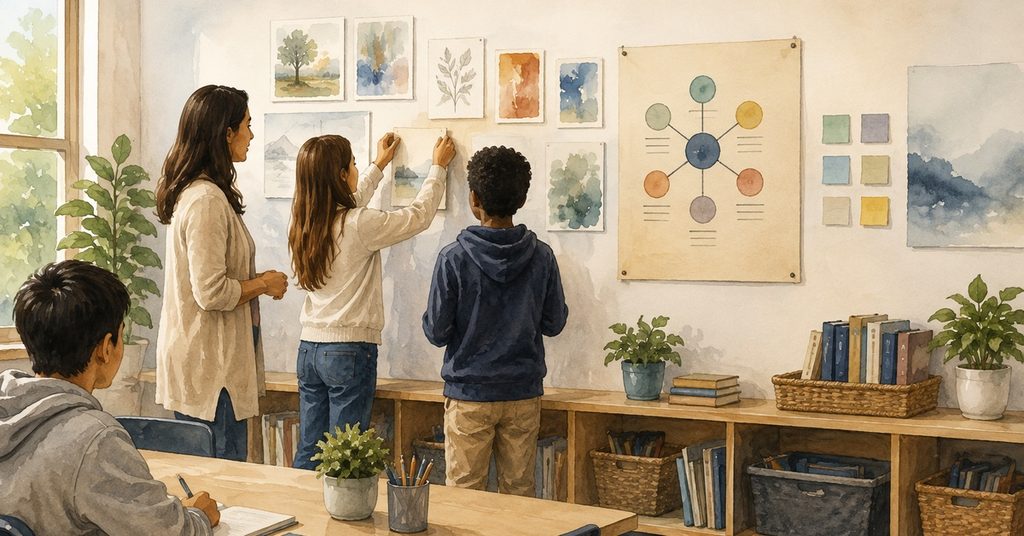
Classroom walls can play a vital role in helping students maximize their productivity, motivation, and focus. As you design the space you will want to keep these intentions prominent in your mind:
- Support a Sense of Identity, Belonging, and Ownership: Students should be involved in making decisions about what is displayed or offered on the classroom walls—their learning space is influenced by how it reflects their presence and their ability to leave their own mark on it over time. To this end, it is powerful to see wall displays from every student, as these serve as inspiration and expressions of their dedication to learning, as well as to creating a classroom community where everyone feels safe making their own unique contributions.
- Support Organization: Well-organized displays of schedules, calendars, daily goals, and upcoming assignments help foster students’ ability to self-manage and feel oriented. The consistency of location and format can help students feel more secure about where to look for the information they need, what’s coming, and how to prepare for it.
- Honor Cherished Values and Aspirations: The walls can communicate the most cherished values and aspirations of our classroom community and connect it to the world beyond. A flag, a picture of a hero, are traditional ways to show these. So are images of the Earth as seen from space, as well as imagery of the diversity and unity of the world’s peoples. Additionally, posters expressing appreciation for effort, kindness, and the value of making and learning from mistakes communicate a “mission statement” for the class. Our walls are also a powerful place to see signed documents outlining agreements, rules, and promises agreed upon by consensus.
- Make It Attractive, But Not Distracting: We may be tempted to create fabulousness with well-intentioned color, information, and sheer stuff, but it is very easy to provide too much of a good thing. Depending on the needs of our own students, it’s helpful to remember that walls decorated in blues and greens, with a reduced density of information, can be generally calming, whereas reds, oranges, and yellows can be stimulating, as can the presence of informational posters and texts. There is no universal rule but this one: Enough is enough—always aim for calm, productive focus with encouragement of energy, as needed, in moderation, to best meet the needs of the particular students in your classroom.
Originally published in Larry Ferlazzo’s Classroom Q&A, Education Week, December 18, 2018.
← Back to Publications & Resources
