


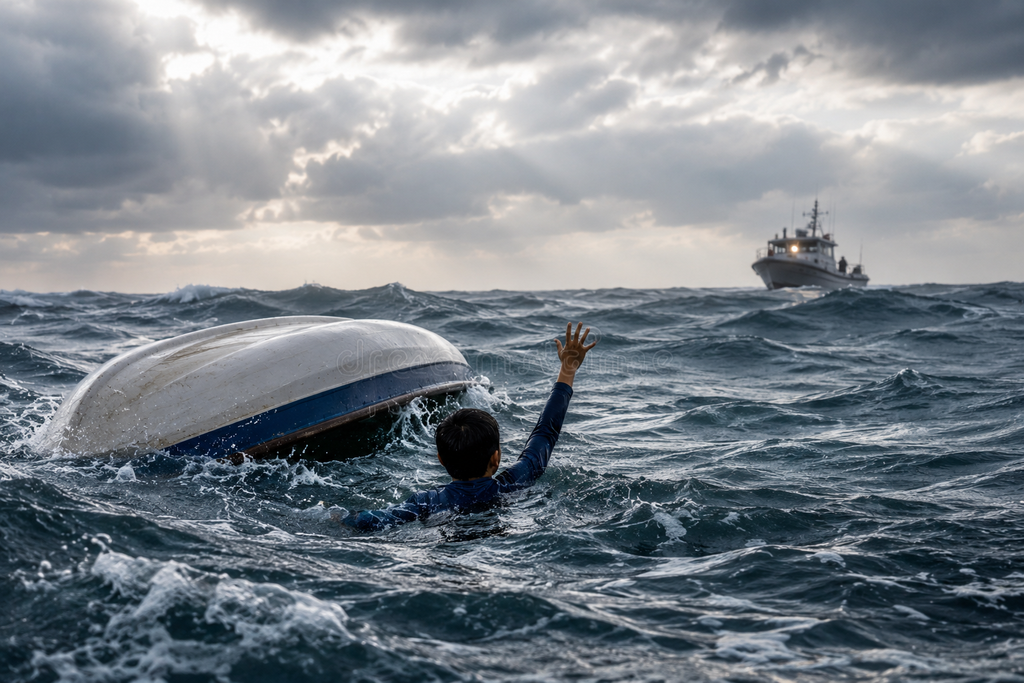
Imagine being in a small boat when a surge of waves causes it to capsize. Survival depends not on a single act, but on a series of rapid, moment-to-moment decisions: conserving energy, regulating breath, timing movements between powerful waves, drawing the attention of a nearby craft, and resisting panic.
Many multilingual learners facing adversity navigate similarly complex forces. They may learn to observe closely, perceive risk, navigate across languages and cultures, and anticipate the adaptations needed for their survival and well-being. These responses can reveal strengths developed through challenging circumstances—strengths that may not always be immediately visible in school.
Supporting multilingual learners facing adversity requires an empathetic, strengths-based approach. Rather than focusing primarily on what students have experienced or what they may need, we can also ask: What strengths have they developed? What have they learned to do? And how can we create learning environments that recognize and build on those capacities?
Recognize the Strengths Students Bring
Students living with adversity may bring capacities that conventional measures of achievement do not readily capture. They may demonstrate perseverance, adaptability, strategic thinking, resourcefulness, keen observation, or the ability to navigate between languages, cultures, and expectations.
Recognizing these capacities does not minimize adversity or its effects. Instead, it helps us see students more fully—not solely through the challenges they have encountered, but also through the knowledge, abilities, and ways of responding they have developed.
Cultivate Dignity and Belonging
A strengths-based approach also asks us to consider the environments we create. Students are more likely to participate, take academic risks, and contribute their ideas when they experience dignity, a sense of belonging, and genuine membership in the learning community.
Small practices matter: learning and using students’ names correctly, creating opportunities for students to share their experiences and interests, incorporating their home languages and cultures into learning, and ensuring that every student has meaningful ways to participate.
Build on Students’ Languages, Experiences, and Knowledge
Multilingual learners’ languages and cultural knowledge are resources for learning. Providing opportunities to use home languages, connect new learning with prior experiences, and draw on family and community knowledge allows students to use what they already know as a foundation for new learning.
Collaborative learning can be especially powerful when it is intentionally structured so that students are not simply placed together but have meaningful roles, opportunities to contribute, and multiple ways to communicate their thinking.
Notice and Build on Students’ Capabilities
When students disengage, remain quiet, struggle with a task, or respond in unexpected ways, it can be tempting to interpret what we see too quickly. A strengths-based lens encourages us to look more closely at what students understand, the strategies they are using, and the conditions that support their engagement.
What does the student appear to understand? What strategies are they using? When do they participate most readily? What conditions seem to support their engagement? These questions can help us distinguish between what students cannot yet do and what they may not yet have had an equitable opportunity to demonstrate.
Deepen Practice Through Professional Learning
Strengths-based teaching does not happen simply because educators care about their students. It requires opportunities to learn, reflect, collaborate, and examine practices over time.
Ongoing professional learning can help educators deepen their understanding of the relationships among language development, culture, adversity, and learning and develop practical ways to recognize and build on students’ strengths.
Expand Possibilities for Learning and Belonging
The capsized boat reminds us that navigating adversity requires far more than endurance. It calls for observation, adaptation, decision-making, persistence, and the ability to draw on available resources.
Multilingual learners facing adversity may bring many of these capacities into our schools. Our responsibility is to recognize the strengths they have developed and create the conditions in which those strengths can contribute to learning, belonging, agency, and opportunity.
In doing so, students no longer have to navigate the seas alone.
← Back to Publications & Resources
