

By Debbie Zacarian and Becki Cohn-Vargas

As one school year ends and we plan for the next, we see the glaring inequities the pandemic has amplified and recognize that steps must be taken to address them. Beyond adopting new hygiene guidelines and reducing our schools’ exposure to potential infection, it’s urgent that we focus just as much, if not more, attention on an inclusive paradigm of schooling. This calls for a renewed focus on students’ global well-being.
We propose four guiding principles:
1. Address structural inequities by ensuring equitable access in meeting the academic and social-emotional needs of students of all backgrounds.
The pandemic has exacerbated the social justice disparities between students’ living conditions, access to health care, educational opportunities, and more. This has seriously impacted students of color and others, including the epic number of minors who were already living in poverty and/or with adverse childhood experiences. Shifting schedules and staggering attendance is not enough: the entire focus of our teaching has to shift. In addition to facing the lack of resources and access to technology, we must look deeper. While the majority of US K-12 teachers are White, a growing number of students are from a diverse range of racial, cultural, and ethnic backgrounds. As such, educators need training to teach and embrace a diverse student populace.
Research has identified educational solutions that make a difference. Schools need to examine their policies and practices to uncover and dismantle structural inequities (e.g., in scheduling, coursework, and assessment practices) that privilege some students over others. We can offer training for educators to examine their own biases and strategies for culturally responsive practices with a growth mindset to help students gain confidence as learners. Educators can use trauma-informed practices in a holistic approach, integrating social-emotional learning into academics, holding high expectations, and valuing each student’s identity and background. We can prepare for a year that includes both in-person and distance learning.
2. Foster strong, meaningful relationships free of stereotypes, bias, and deficit thinking.
Research highlights the power of trusting relationships that draw on students’ interests, strengths, and hopes. Focusing on relationships includes fostering our students’ identities. Our students should feel and see through both our words and deeds that their backgrounds and who they are matter. Educators need to create identity-safe environments where each student feels welcomed, accepted, and safe to be themselves. This means finding commonalities while celebrating differences, refuting stereotypes, and drawing from the assets that each student brings from their families and communities. By asking questions, we discover students’ passions, which we can in turn incorporate into our curricula.
Try the following questions, whether asked online, in person, or in a journal format:
- What would you like me to know about you?
- Describe a teacher that you liked and why you liked them.
- What does your family enjoy doing?
- What activities have you found helpful during the COVID crisis?
Sharing our responses to the same questions helps students become acquainted with us and build rapport.
3. Consider students’ hierarchy of needs.
Consider Maslow’s hierarchy of needs as one school year closes and another opens:
- Basic needs and safety: Partner with community organizations to do needs assessments to ensure students have a home, sufficient food, and healthcare. Develop systems to maintain communication. In Brockton, Mass., a community greatly affected by COVID-19, the school district coordinated bilingual-bicultural volunteers, counselors, nurses, and paraprofessionals to staff a multilingual call center that supports families with information and access to services. Given the many parents who’ve lost jobs, support will be needed well into the future.
- Psychological safety and wellbeing: Determine which students are experiencing chronic stress (e.g., concerns about their families, fear of exposure to the virus, and/or worry about falling behind in school). School teams can partner with community services to support students and families in distress.
- Love and attachment: Research demonstrates that resilience is strengthened by a relationship with a caring adult. Build rapport with students individually and in groups. Encourage strengthening relationships with their families. One student said, “Before, I was not very close with my mom, but this quarantine gave us a chance to spend quality time together. She spent time with me on my schoolwork and taught me how to make tamales. We are much closer.” Get to know your students and how the pandemic has affected their relationships.
- Self-actualization: Even in these tough times, we can empower students to aim toward their highest potential. A powerful strategy is to give students leadership roles in guiding their learning. Kelly, a Hayward, CA teacher, and her colleagues organize a yearly health fair. This year, they held it virtually, with a variety of speakers, including an ER doctor, a COVID-19 researcher, and others. Student teams presented on health themes, including those that concerned them most (e.g., obesity, diabetes, cancer). They provided evidence from research and their team’s analysis of solutions, including addressing Covid-19. Through contributing, students find meaning in life, a sense of purpose, and hope for the future.
4. Embrace, model, and teach adaptability so that educators, students, and families are ever-ready to face the inevitable challenges that lie ahead.
Throughout the pandemic, we’ve had to roll with the punches. Reopening requires preparing a menu of options with multiple scenarios to serve each student’s needs. Every plan will necessitate several backup plans in the event that schools reopen and close again. We must also account for students with vulnerable health conditions who will remain at home; we must ensure they have full access to distance learning. We can develop structures to identify individual needs and monitor how to meet them. This will also require being hypervigilant to ensure no one is mocked or bullied in person or online; this is a particular concern for Asian American students, who have experienced an uptick in bullying due to the virus’s origin in China.
While students have had to adapt to both major and minor changes, they benefit from seeing teachers as human beings and from acknowledging the daily stressors we all experience. Most importantly, we can explain how we continuously adjust, acknowledging our mistakes and learning from them.
We can celebrate our own and our students’ resilience and even be inspired by our capacity to cope. Consider how technology has evolved and how we have learned new ways to use it to socialize, access information and entertainment, navigate our travels, and fulfill our professional and civic responsibilities.
Closing and Reopening with a Paradigm of Care.
As educators at all levels, we face a daunting task. Each day, we face new challenges: budget cuts, child hunger, mental health issues, and even the newly emerging inflammatory disease possibly linked to Covid-19. Inevitably, changes will continue through and beyond the first day schools reopen. With a team effort and by focusing our attention on equitable access, strong relationships, and the capacity for adaptability, we can prevail and even create new paradigms that nurture autonomous, collaborative learners who care about themselves, each other, and the planet itself.
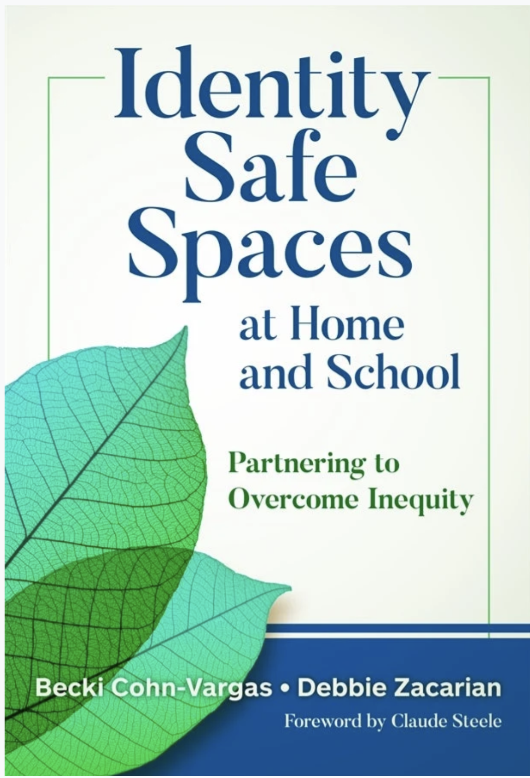
This post originally appeared in Norton Education K–12 Talk. It was coauthored by Debbie Zacarian and Becki Cohn-Vargas, Ed.D., who later coauthored Identity Safe Practices at Home and School: Partnering to Overcome Inequity.
← Back to Publications & Resources
