

by Debbie Zacarian and Michael Silverstone
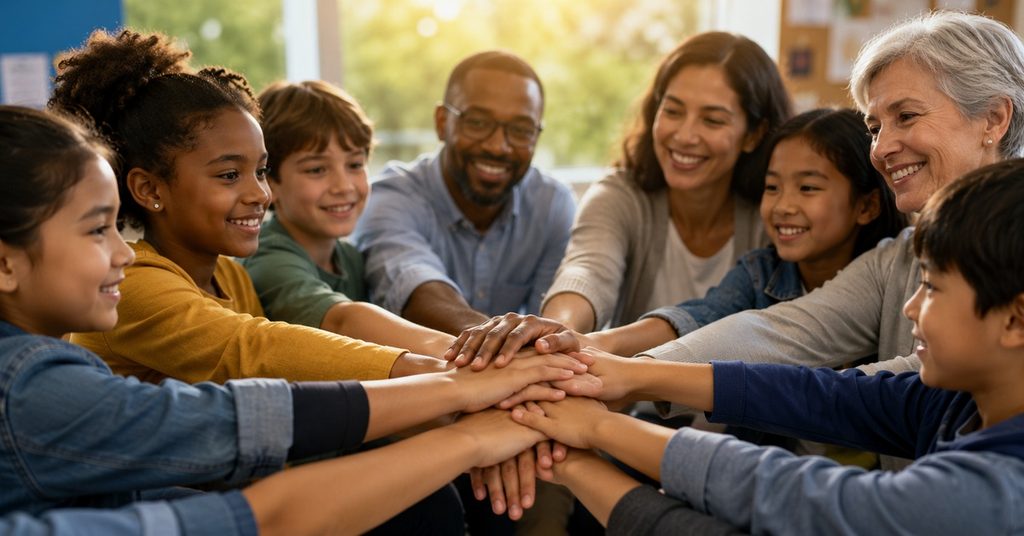
Learning is shaped not only by what we teach, but by the interactions and relationships that surround students. Strong partnerships among students, educators, families, schools, and communities can create the conditions in which students feel connected, participate meaningfully, and thrive academically.
For multilingual learners, these interactions are especially important. Learning is strengthened when classrooms and schools provide frequent opportunities for meaningful social and academic interaction and when educators build on the linguistic, cultural, personal, and experiential strengths that students bring.
Interactions are Key to Learning
Research on student learning has consistently underscored the importance of relationships, feedback, and meaningful interaction. John Hattie’s (2008) synthesis of educational research identified teacher-student relationships and feedback among important influences on student achievement. For multilingual learners, these relationships require particular attention to the personal, cultural, linguistic, socioeconomic, and experiential strengths that students bring to school. Building trusting relationships helps us create learning environments in which students are known, valued, and able to participate meaningfully.
This emphasis on interaction also reflects Lev Vygotsky’s (1978) understanding of learning as a social process. Students make meaning by connecting new learning with what they already know and through interaction with others. Two dimensions are especially important:
- 1. Cognition: Helping students draw on their existing knowledge, including their personal, cultural, linguistic, and lived experiences, as they engage with new concepts.
- 2. Social interaction: Creating frequent opportunities for students to think, communicate, collaborate, and learn with peers, educators, families, and members of the broader community.
Together, these interconnected relationships create a learning environment in which interaction becomes a resource for both academic learning and a sense of belonging.
Interconnected Partnerships
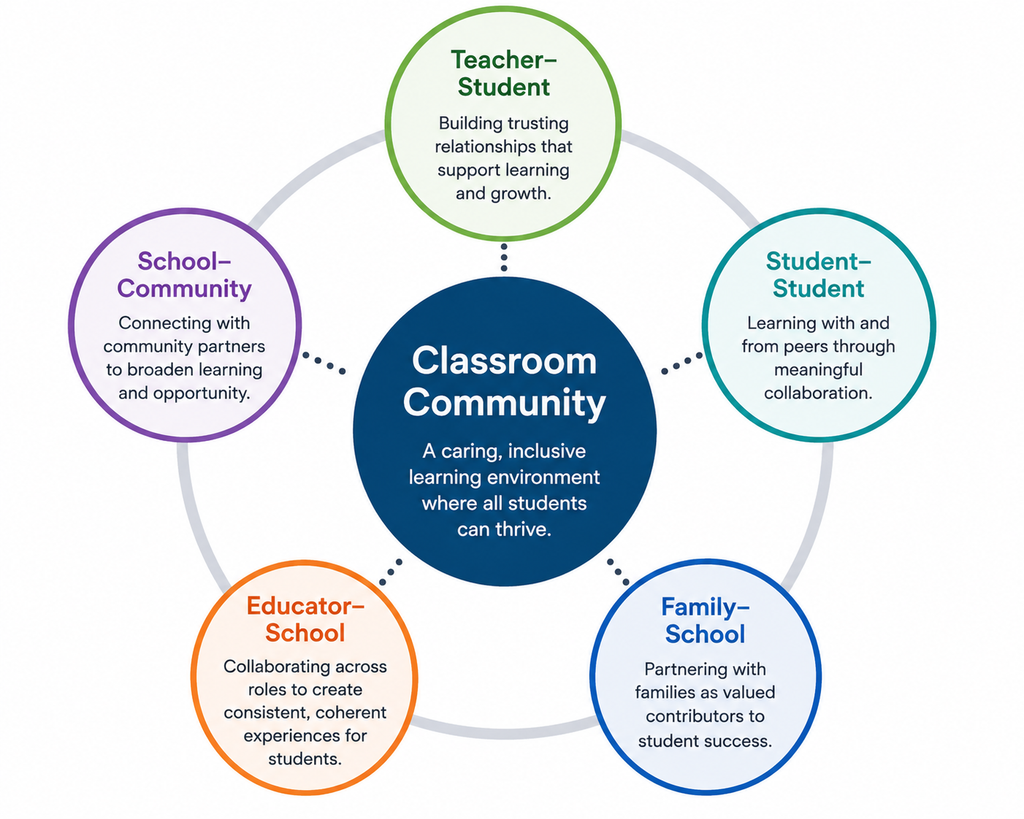
Teacher-Student Partnerships
Student learning and students’ sense of belonging in the classroom are closely connected to the relationships we build with them. Developing these partnerships requires taking time to learn about students’ personal, cultural, linguistic, socioeconomic, and lived experiences and, importantly, the strengths and resources they bring. When we approach students with curiosity, empathy, and respect, we are better positioned to create learning communities grounded in trust, belonging, and meaningful participation.
Student-Student Partnerships
Collaborative learning—including purposeful work in pairs and small groups—can provide powerful opportunities for students to develop ideas, learn from one another, and use language for meaningful purposes. For multilingual learners, these interactions can be especially important because they create opportunities to listen, speak, negotiate meaning, contribute expertise, and build relationships with peers.
Effective collaboration, however, does not occur simply by placing students together. It requires attention to students’ diverse identities, experiences, strengths, and ways of participating, as well as thoughtful structures that support equitable participation and a sense of belonging.
Family-School Partnerships
Families are essential partners in students’ learning, yet many educators receive limited preparation for building meaningful partnerships with families. As school communities become increasingly linguistically, culturally, and economically diverse, it is especially important to create opportunities for families to participate in ways that recognize their strengths, knowledge, experiences, and aspirations for their children.
Classroom-based family events can provide meaningful opportunities to:
- build relationships and a sense of community;
- make classroom learning visible and accessible to families;
- draw on families’ knowledge, experiences, languages, and other strengths; and
- develop a shared culture of learning between home and school.
Educator-School Partnerships
Partnerships among educators are equally important. Multilingual learners interact throughout the school day with classroom teachers, content-area teachers, multilingual learner specialists, special educators, counselors, and other members of the school community. When educators collaborate, share knowledge about students’ strengths and needs, and coordinate their approaches, they can create greater continuity and coherence in students’ learning experiences.
School-Community Partnerships
Partnerships with the broader community can extend learning beyond the classroom and provide students with meaningful opportunities to apply what they are learning. Community-based experiences can connect academic content with authentic purposes, introduce students to new perspectives and resources, and create opportunities to contribute to issues that matter to them and their communities.
These experiences can invite students to work collaboratively to:
- investigate authentic issues and opportunities;
- identify ways they might contribute;
- plan and carry out their ideas;
- reflect on what they learned from the experience; and
- recognize and celebrate their collective efforts.
When we intentionally create opportunities for meaningful interaction among students, educators, families, schools, and communities, we strengthen more than engagement. We create conditions in which students can contribute their strengths, develop a sense of belonging and agency, and participate more fully in their learning.
Originally published in MATSOL Blog. This article draws from Debbie Zacarian and Michael Silverstone’s In It Together: How Student, Family, and Community Partnerships Advance Engagement and Achievement in Diverse Classrooms (Corwin, 2015).

← Back to Publications & Resources
