



Creating effective language education programs for multilingual learners requires more than meeting legal requirements. It also requires policies, practices, and structures that recognize students’ strengths, engage families as partners, and create meaningful opportunities for multilingual learners to participate and thrive.
Federal and state requirements provide an important foundation for this work. The following four practices can help schools meet these responsibilities while building stronger, more inclusive language education programs
Identify Multilingual Learners Promptly and Effectively
Federal law requires schools to identify newly enrolled multilingual learners, provide appropriate language assistance services, and notify parents or guardians about their child’s identification and language education program within required timelines.
To do this well:
- Allocate sufficient staff and time to identify multilingual learners.
- Begin the identification process as soon as a student enrolls.
- Use the information gathered to determine whether the student is eligible for language assistance services and identify appropriate programming.
- Track the time and resources required for the identification process so that schools can plan for adequate staffing and support
Partner with Families of MLs
Federal law also requires schools to communicate with parents and guardians in a language they understand and provide information about their child’s language education and school programming.
To do this well:
- Identify the language parents and guardians prefer to use and, just as importantly, how they prefer to communicate, including through text, audio, video, phone, or other accessible formats.
- Draw on multilingual staff, community resources, interpreters, translators, and digital services to support robust two-way communication.
- Communicate with families regularly using multiple approaches, such as translated newsletters, local radio broadcasts in families’ home languages, and short-form videos.
Identify Students’ Many Linguistic and Cultural Assets
Multilingual learners bring many linguistic, cultural, familial, and experiential strengths to school. Learning about these assets can help educators create more meaningful connections with students and design learning experiences that build on what students already know and value.
In addition to gathering required information about students’ language backgrounds and administering appropriate identification screeners, ask parents and guardians questions such as:
- What makes your child unique?
- What are things you enjoy doing as a family?
- What activities does your child enjoy outside of school?
- Are there clubs, sports, or other activities your child has participated in or would like to participate in?
Ask students questions to learn more about who they are as individuals:
- What activities, sports, hobbies, or games do you enjoy?
- What do you like to do with your family?
- Tell me about a teacher you liked. What did you appreciate about that teacher?
Draw on what students and families share to create meaningful curricular and extracurricular opportunities that reflect and build upon their strengths, interests, experiences, and aspirations.
Build Language Education Programs Together
Federal law requires schools to ensure that multilingual learners are not unnecessarily segregated or isolated from other students. Meeting this responsibility involves more than compliance; it requires thoughtful collaboration across the school community.
Rather than designing language education programs in isolation, create work groups that bring together people with varied roles, perspectives, and experiences. These groups can help develop programs that welcome students and families, draw on their strengths, and reflect the mission and priorities of the larger school community.
Figure 1: Sample Work Group
(Zacarian, 2023, p. 52).

Work groups can also help identify and amplify the strengths of students, families, educators, and the broader community.
To do this well:
- Connect the district’s mission and vision to the goals of its language education programs.
- Draw on students’ linguistic and cultural assets when designing learning opportunities.
An example is a district whose mission is to support student engagement in community service. Its workgroup brainstormed ways in which its language education program would be a model of the district’s vision. As a result, multilingual learners provide translation services at a local senior center.
Figure 2: Connecting Language Education Programming to School/District’s Mission and Vision
(Zacarian, 2023, p. 55).

Another example of a language education program mirroring its district’s mission is the Manthala George Global Studies Elementary School in Brockton, MA. A key mission of the district is to empower students. Students participating in its dual language programming in Spanish and English, French and English, and Portuguese and English learn how to speak publicly. While in middle and high school, graduates of the dual language program speak at meetings with prospective families to share the benefits of participating in the school’s dual language program.
An additional example is Prince George’s County Public Schools in Maryland. The district’s mission is to provide a “transformative educational experience anchored by excellence in equity… to build empowered communities and a more inclusive and just world.” According to Dr. Jennifer Love, director of language access, the district has worked collaboratively to “move from language access as an add-on to fully embracing multilingual communication… to reflect the district’s mission of providing accessible systemic communication with families.” She also explains that there is now “inherent accessibility of all systemic communication, from e-blasts and outreach videos to social media, and the system website, that remains focused on the linguistic needs of the community and overcoming language obstacles to engagement.”
A third example includes a district work group with a small but growing number of MLs. They are creatively drawing on multilingual learners’ linguistic strengths by supporting them in sharing how subject matter, such as mathematical equations, is expressed in their home languages. They are doing this to demonstrate various models of the same concept.
These examples show what is possible when we recognize multilingual learners’ strengths and work collaboratively to transform the policies, practices, and structures that shape their educational experiences.
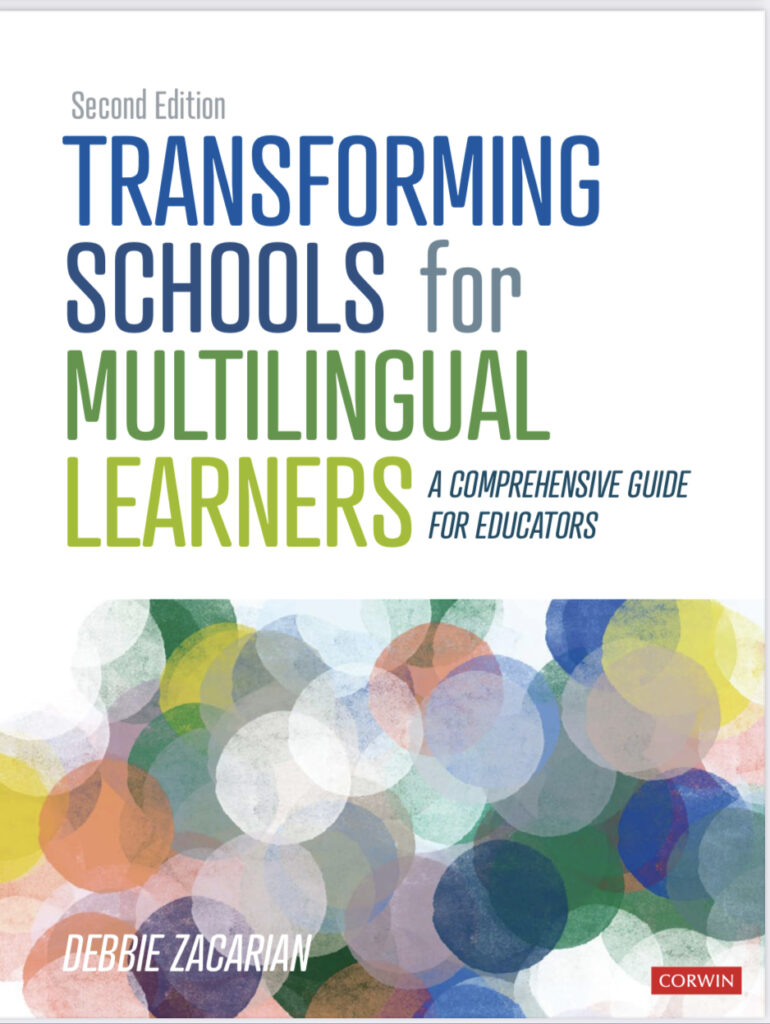
This post originally appeared in Corwin Connect. It draws from the second edition of Transforming Schools for Multilingual Learners: A Comprehensive Guide for Educators.
← Back to Publications & Resources
